
Helping parents of neurodivergent children reduce mealtime stress and expand food variety.
Helping neurodivergent children with autism, ADHD, and restrictive eating feel confident around food by supporting parents with practical, dietitian-led feeding guidance.
If mealtimes are filled with anxiety, sensory overwhelm, or nutrition worries, you are not alone. I help families to feel confident feeding their child.
If you are looking for simple steps that make a real difference, this is where to begin.
I went from feeling helpless watching meals go untouched to creating mealtimes where kids explore food willingly.
kristy jordan
dietitian & feeding therapist
Hi, I'm Kristy!
I know how exhausting and disheartening mealtimes can feel, especially when your child is autistic and food feels like a daily battle. I’ve seen the stress, the worry, and the frustration when every strategy seems to fall short.
Through years of working alongside families as a feeding therapist, I’ve learned how to create a mealtime environment that encourages eating. My approach helps children feel safe exploring food at their own pace, while giving parents the tools and confidence to support them without pressure.
I’ve walked with many families of autistic children as they’ve rebuilt trust at the table, celebrated progress, and rediscovered joy in mealtimes - and I’d love to help you do the same.

Support your child’s health and development by making achievable progress with food today
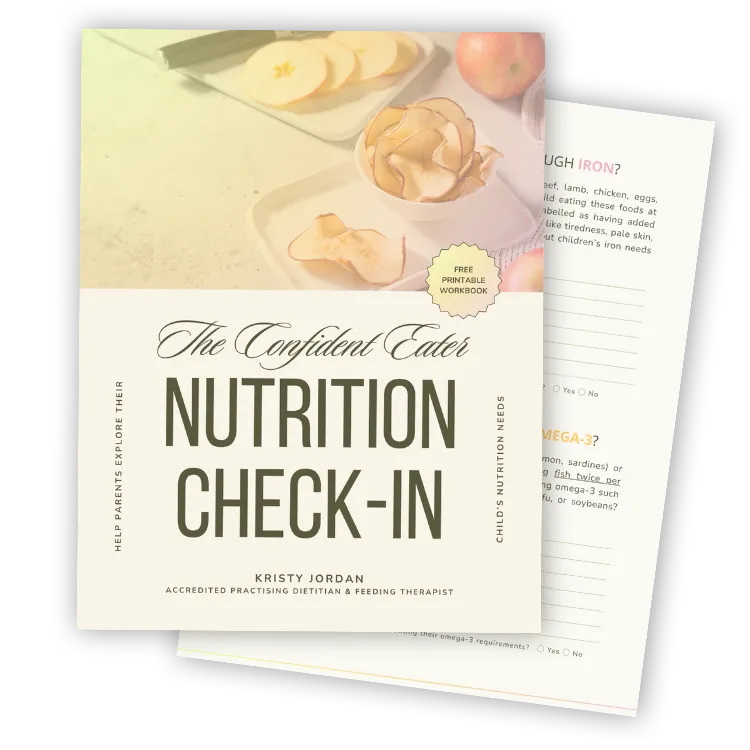
Are you worried about your child's nutrition?
A free, printable workbook for parents
How many times have you wanted to feel confident about your child’s nutrition, but felt stuck between worrying too much and avoiding thinking about it altogether?
If your child eats a limited range of foods, it is natural to wonder whether they are getting what they need.
This Nutrition Check-In is designed to help you understand where your child’s intake may already be okay, and where extra support might be helpful.
Ready to build the family meals of your dreams?

Join The Community
Get guidance from experts and join a supportive community of parents who understand. Together, we’ll help you create a mealtime environment where your child's needs are being met, and you can relax knowing you are doing everything you can to support them in their journey.

Follow Me On Instagram
Get daily tips, inspiration, and behind-the-scenes insights to help you stay motivated and improve your relationship with your child at mealtimes.

Subscribe To The Newsletter
Subscribe to the Grate Adventure newsletter for actionable strategies, expert advice, and inspiring stories to help you to learn what changes you can make to help your child, starting today.
Ready to build the life of your dreams?

Let's chat
Ready to work with a coach to uplevel your life and business?
Listen to the
Podcast
view my
services
read the
BLOG
Let's chat
Ready to work with a coach to uplevel your life and business?


Let's learn
Learn at your own pace and make quantum leaps.
Student Love Notes
We've helped so many incredible students to find success as Virtual Assistants...

The VA Business Blueprint helped me to go from feeling completely stuck to starting my business and getting my first client!
Ellen, business name

I enrolled in the VA Services Academy feeling completely lost - within 2 weeks I knew exactly what to offer & what to charge.
Ellen, business name

Beginner to Booked Out was a game-changer for me. Anna and her team are incredible and I'm booked out for the next 3 months!
Ellen, business name
New on the blog...

When They Don't Eat It
You served a food you thought they would like or would at least try.
And nothing happened.
It is easy to feel disappointed in these moments. But before you go there, pause and go back over what actually happened.
Were they hungry?
Did they look at the food?
Did they think about trying it?
Did they comment on it?
Recently, I put out a bag of dried apple. I thought I had a good chance.
Turns out I was wrong.
But when I reflected on what happened, I realised something important. They commented on it. That meant they knew it was there. I am also fairly sure they were hungry, which means they likely considered trying it. In fact, I remember them making a comment about it - a negative one.
This is not a bad thing.
That comment they made tells me they were deciding whether or not it was worth trying. They probably have tried it before and did not like it. And this time, they decided it was not worth it.
So, was this a waste of time?
One thousand percent, no.
Why? Because we both fulfilled our roles, and it was not a negative experience. I would describe it as a neutral one.
I offered the food. That is my job.
They decided whether or not they wanted to eat it. That is their job.
This is empowering for them. They were in control. They felt safe. They even tested me by making a negative comment, and I did not respond to it. That told them something important: I had no expectation that they eat it. I was not disappointed. There was no pressure.
There was an opportunity for them to try the food. They were hungry. They may even have felt motivated to try it. There was interest there. And they chose not to this time. But because the situation was supportive and comfortable, it is much more likely they will try it next time, or the time after that.
My job is to keep offering without pressure.
Their job is to keep making their own food decisions.
Maybe one day they will be really hungry, watching me eat it, and feel motivated enough to give it go.
If I get disappointed and stop offering it altogether, that is on me - and it does not help them.
If you are worried about your child’s eating, you are not alone. Many parents find themselves wondering whether their child’s limited food variety is normal for their age, or if it is a sign there is something more going on.
In my monthly newsletter I share reflections, practical support, and updates about upcoming resources, as I work toward creating a space for parents and carers who want feeding their child to feel calmer and more manageable. You are very welcome to join if that kind of support would be helpful for you.
You can sign up here: grateadventures.com/newsletter

Want more support?
If this resource helps but you’re still feeling unsure, here are a few next steps:
Ongoing support: Join the Grate Adventures membership for guidance, reassurance, and community
Personalised help: If you’d like individual support, you can book a session with me here: