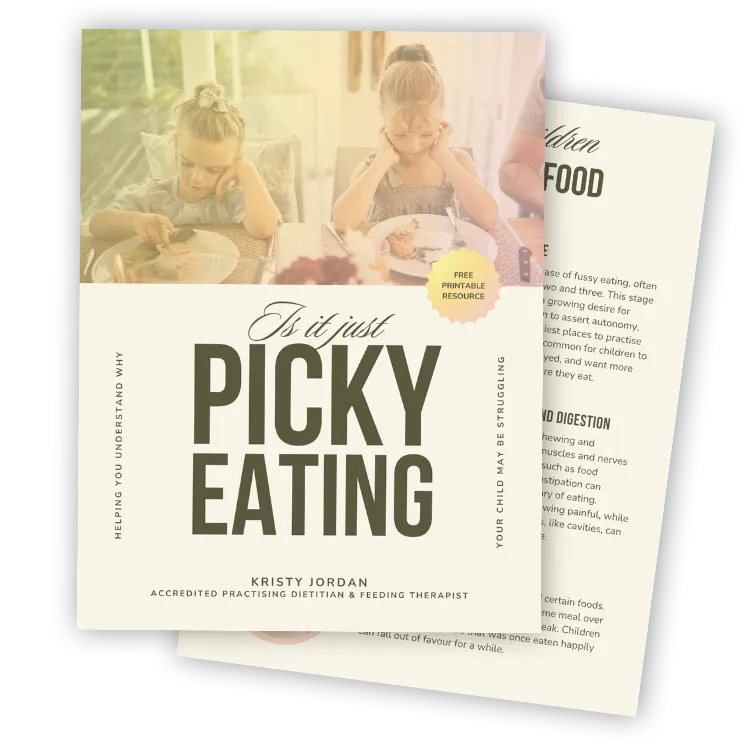
Is It Just Picky Eating?
If you are worried about your child’s eating, you are not alone. Many parents find themselves wondering whether their child’s limited food variety is normal for their age, or if it is a sign there is something more going on.
For some children, picky eating is a part of their typical development and eases as they get older. For others, however, ongoing restriction, distress around food, or very limited variety can begin to affect nutrition, growth, and general wellbeing. Along with causing parents a great deal of stress!
This resource is designed to help you step back and make sense of what you are seeing. It will guide you through common reasons children struggle with food and eating, help you to reflect on your child’s eating patterns, and support you to feel clearer about what could be influencing their picky eating, and when it may be time to seek extra support.
What this workbook will help you understand:
Inside, you will explore:
The difference between common picky eating and feeding challenges that can make eating genuinely hard for some children
Eight key areas that can influence eating, including development, sensory processing, appetite, past experiences, and the eating environment
Patterns in your child’s behaviour and responses around food, helping you understand what may be getting in the way
The eight key areas that can affect a child’s eating
Picky eating is not always about the food itself. For many children, eating is influenced by a combination of developmental, sensory, physical, and emotional factors. This workbook walks you through eight key areas that commonly impact how a child eats, helping you understand why eating might be challenging right now.
These include:
Developmental stage
When food refusal is linked to normal growth, independence, and changing priorities
Chewing, swallowing, or digestion
Physical factors like reflux, constipation, oral motor skills, or dental discomfort
Food fatigue
Losing interest in foods that have been eaten repeatedly
Sensory processing differences
Sensitivities to texture, taste, smell, appearance, temperature, or sound
Reduced appetite
Differences in hunger cues, illness, stress, or low appetite patterns
Past negative experiences
Choking, gagging, vomiting, pressure, or pain linked with eating
The eating environment
Noise, expectations, social pressure, and emotional tension at meals
Eating disorders
Including ARFID, where food avoidance significantly impacts nutrition, growth, or wellbeing
Taking your next step
This resource is not a diagnostic tool and is not intended to replace medical or individualised healthcare advice. Every child is different, and concerns about your child’s growth, health, or eating should always be discussed with your doctor or relevant healthcare professional.
The purpose of this workbook is to help you reflect, notice patterns, and consider possible factors that may be influencing your child’s eating. It is designed to give you areas to explore further, and not designed to label, diagnose, or provide treatment recommendations.
If at any point you are worried about your child’s health or wellbeing, seeking professional support is an important next step.
If you are ready to explore the eight areas that may be influencing your child's picky eating, you can download the workbook below.

Want more support?
If this resource helps but you’re still feeling unsure, here are a few next steps:
Ongoing support: Join the Grate Adventures membership for guidance, reassurance, and community
Personalised help: If you’d like individual support, you can book a session with me here: